Husk
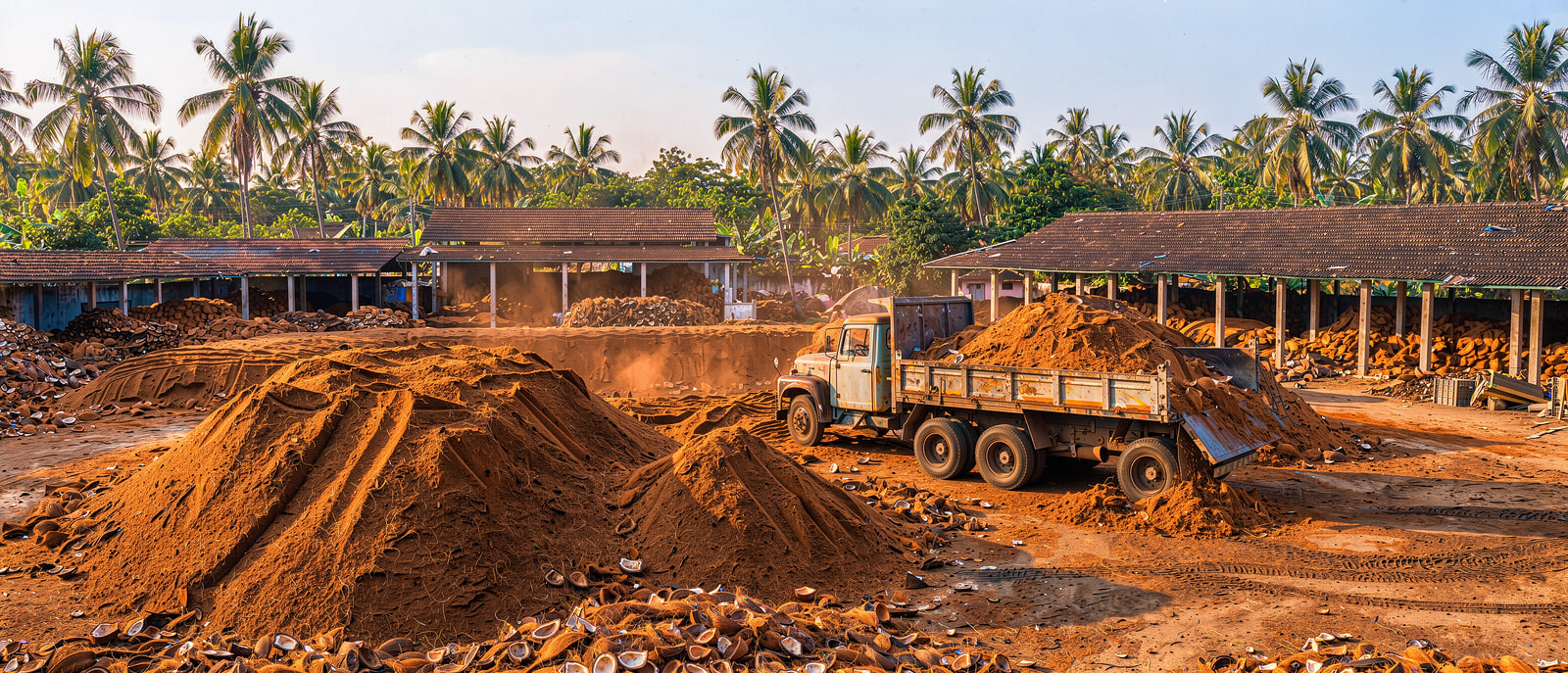
We buy mature husks from the estates around Matara, because fresh husk gives longer and brighter fibre.
Coco peat, coir fibre, mattress coir and twine, shipped by the container
Process
We grade every part of the husk on the same ground and with the same machines, which is why four lines can ship in one container.
One husk, three streams
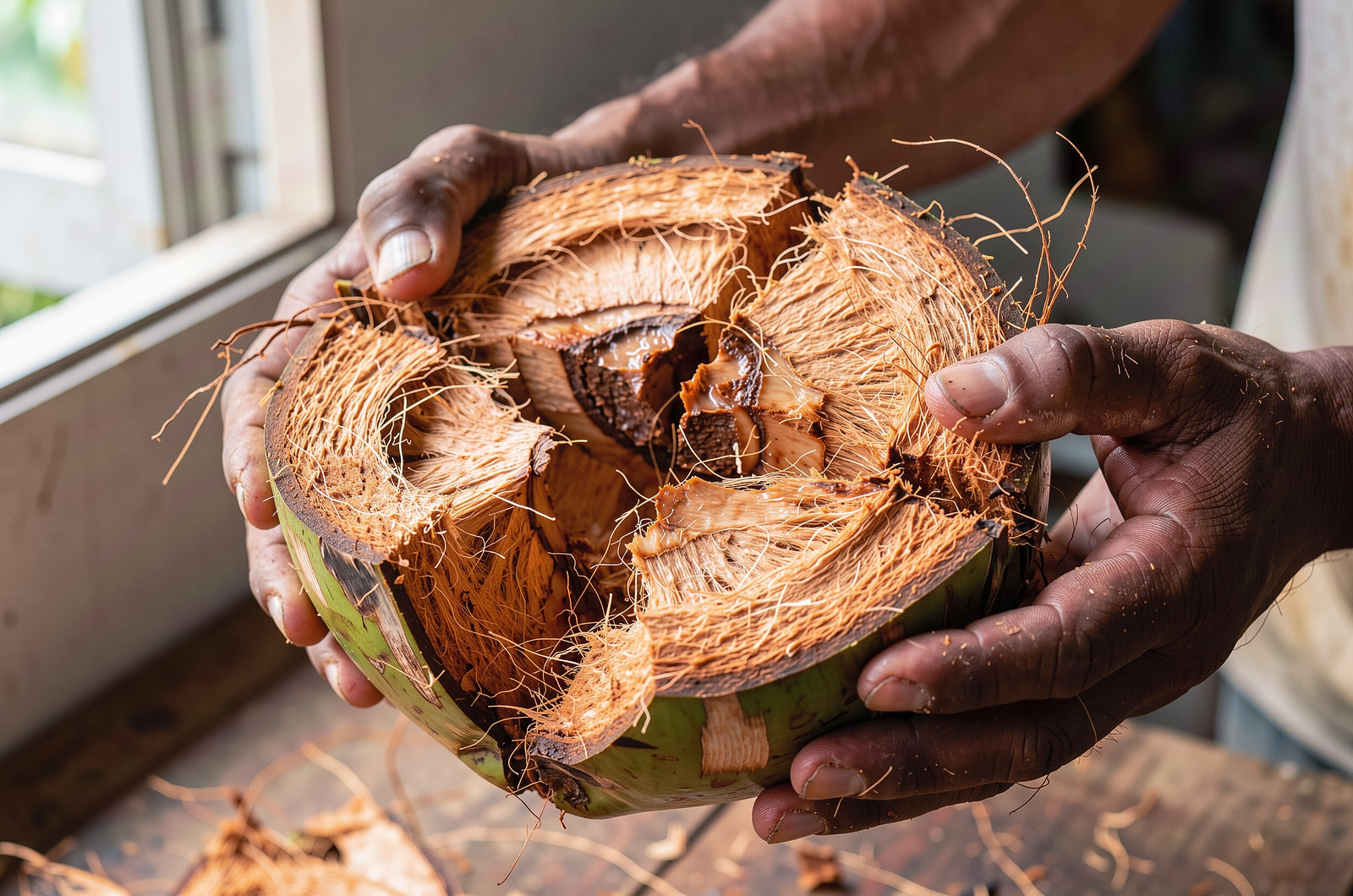
A coconut husk splits into long fibre, short fibre and pith, and each stream becomes a different product.
Long strands go to brushes, twine and export bales.
Shorter strands become mattress coir and padding.
The rest is aged, washed and pressed into coco peat.
Shares are approximate by weight of a mature husk and vary with season and source.
Husk to container
Scroll sideways through the mill to follow one husk from the estate to the container door.
We buy mature husks from the estates around Matara, because fresh husk gives longer and brighter fibre.
Husks are soaked so the fibre separates from the pith without breaking.
Spiked drums tear each husk into bristle fibre, mixed fibre and pith.
Fibre and pith dry in the open sun until moisture falls below the grade.
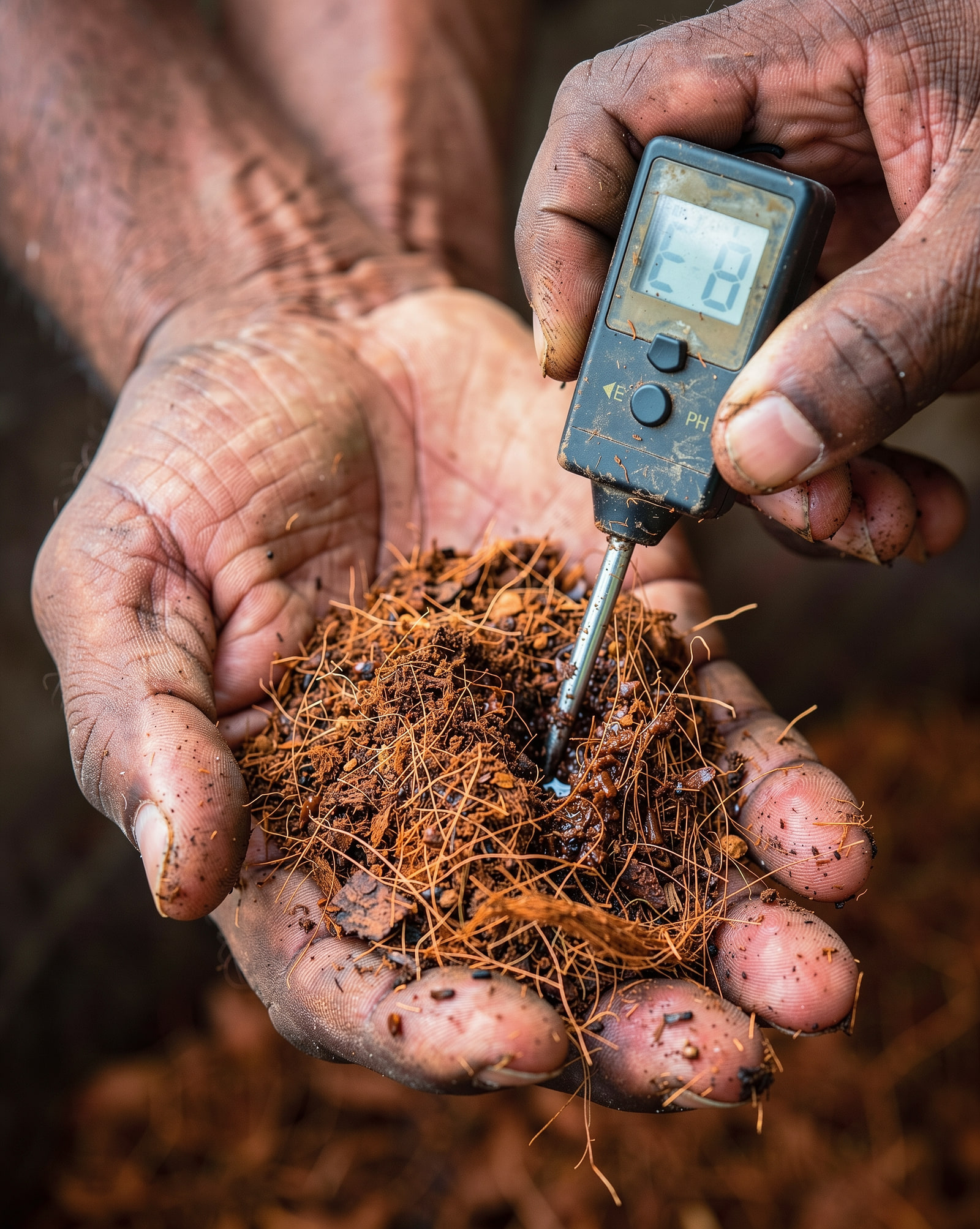
We sieve the pith, clean the fibre and test every batch for EC, pH and moisture.
Hydraulic presses turn graded material into bales and blocks that stack evenly.
We stuff and seal each container at the yard, then send it to Colombo for shipping.
We buy mature husks from the estates around Matara, because fresh husk gives longer and brighter fibre.
Husks are soaked so the fibre separates from the pith without breaking.
Spiked drums tear each husk into bristle fibre, mixed fibre and pith.
Fibre and pith dry in the open sun until moisture falls below the grade.
We sieve the pith, clean the fibre and test every batch for EC, pH and moisture.
Hydraulic presses turn graded material into bales and blocks that stack evenly.
We stuff and seal each container at the yard, then send it to Colombo for shipping.
Questions
If your question is not here, the mill will answer it on WhatsApp within a day.
We defibre mechanically after a short soak. There is no long lagoon retting, so the fibre is brighter and cleaner.
Aged pith is washed with fresh water and drained until a 1:1.5 extract reads below 0.5 mS/cm. It is then sun-dried and sieved before pressing.
Yes. We measure EC, pH and moisture on every batch before pressing, and we check fibre for length, impurities and moisture before baling.
Yes. Buyers are welcome at the yard in Denipitiya, about three hours from Colombo. Message us on WhatsApp to arrange a day.
Buyers are welcome at the mill, and a sample of any line reaches you by courier within a week.